
Second Order Effects

A Narrative Game Exploring How Cognitive Biases Shape Climate Action and Perception.

WELCOME TO MIND FAUX

An Immersive Experience designed to connect people to climate change impacts and environmental stewardship
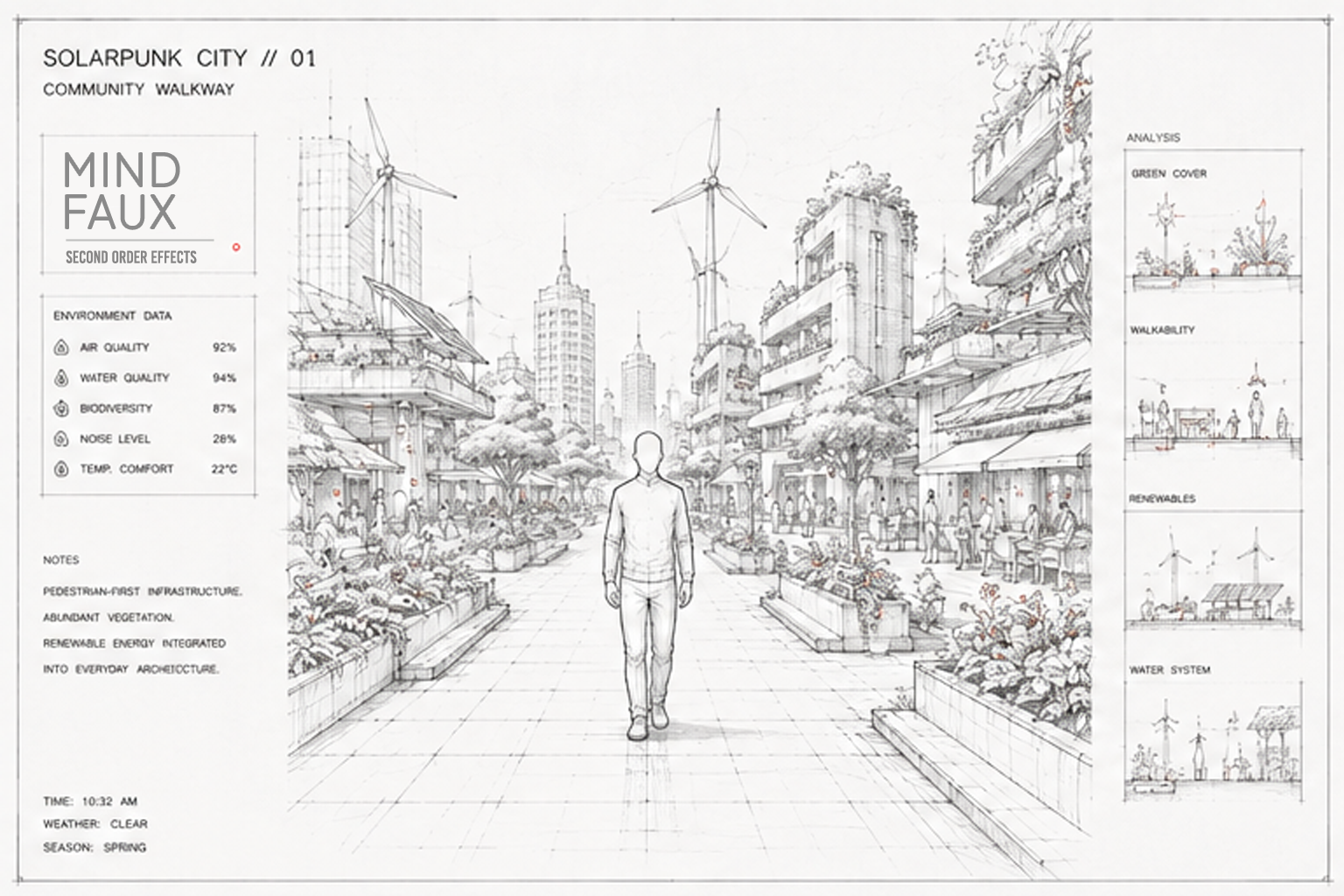
Architectural sketch of a community walkway in Solarpunk City with a person walking in the center, surrounded by buildings, trees, and wind turbines, along with environment and analysis data.

Mind Faux is NOT just a game.
It is an experimental framework for turning difficult conversations into experiences.
We combine:

  • VR/AR

  • Cards

  • Storytelling

  • Discussion

  • Community Events

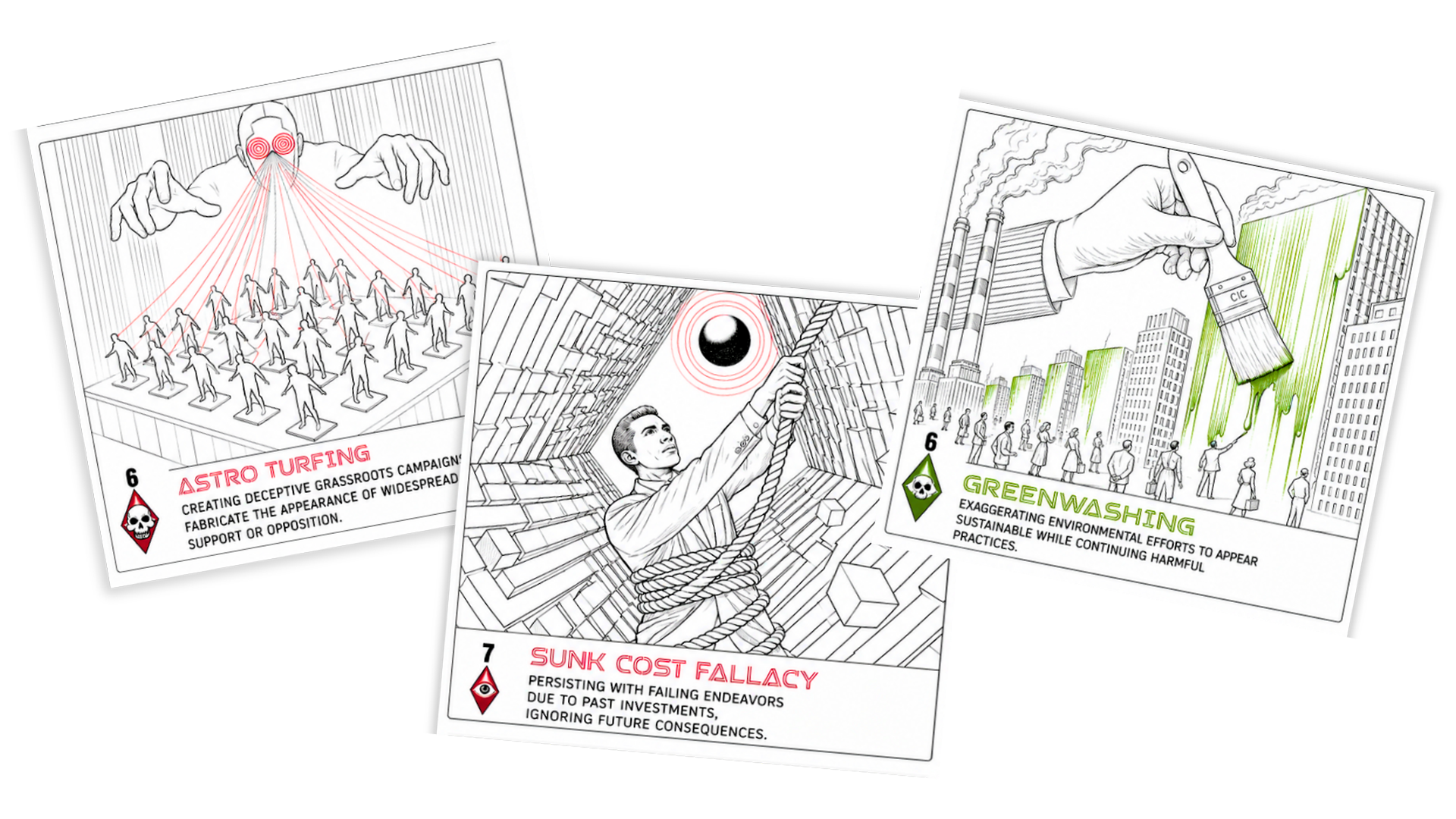
Three illustrated cards with social commentary: one on astro turfing with a figure overseeing a crowd and red lines, one on sunk cost fallacy with a man tied in ropes surrounded by blocks and a moon overhead, and one on greenwashing showing a hand with a paintbrush coloring green on tall buildings, with people walking below.

The Goal: Move people from passive observers to active participants.

Early drafts of cards for deck about direct impacts of climate change, secondary environmental effects, and actions to take on personal, community, and policy levels. Learn on your own or play one of the party game style rules included with the deck (inspired by games like Taboo and Apples to Apples)

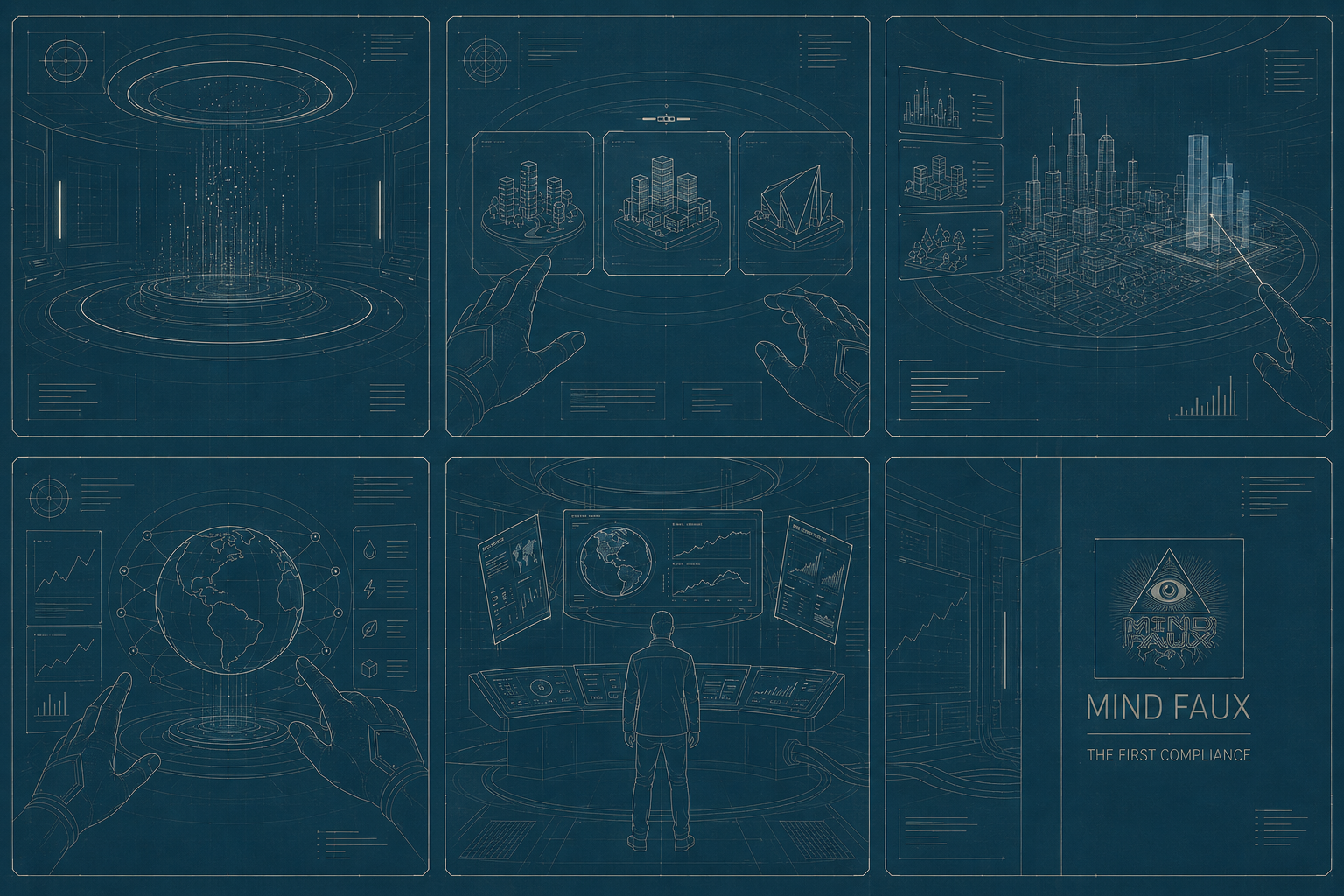
ENTER THE SIMULATION

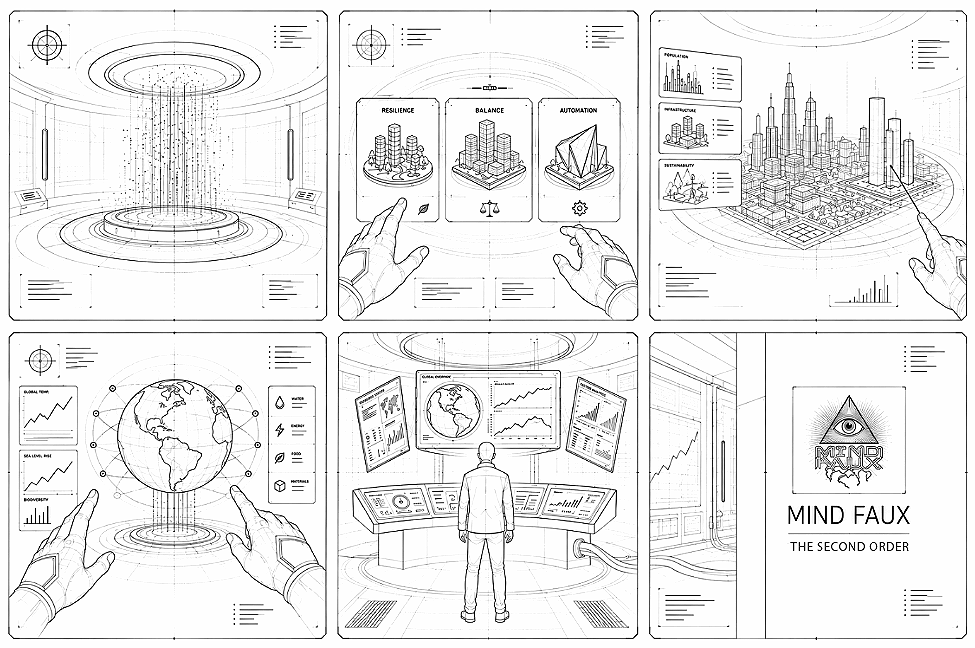
YOU ARE RESPONSIBLE FOR A CITY
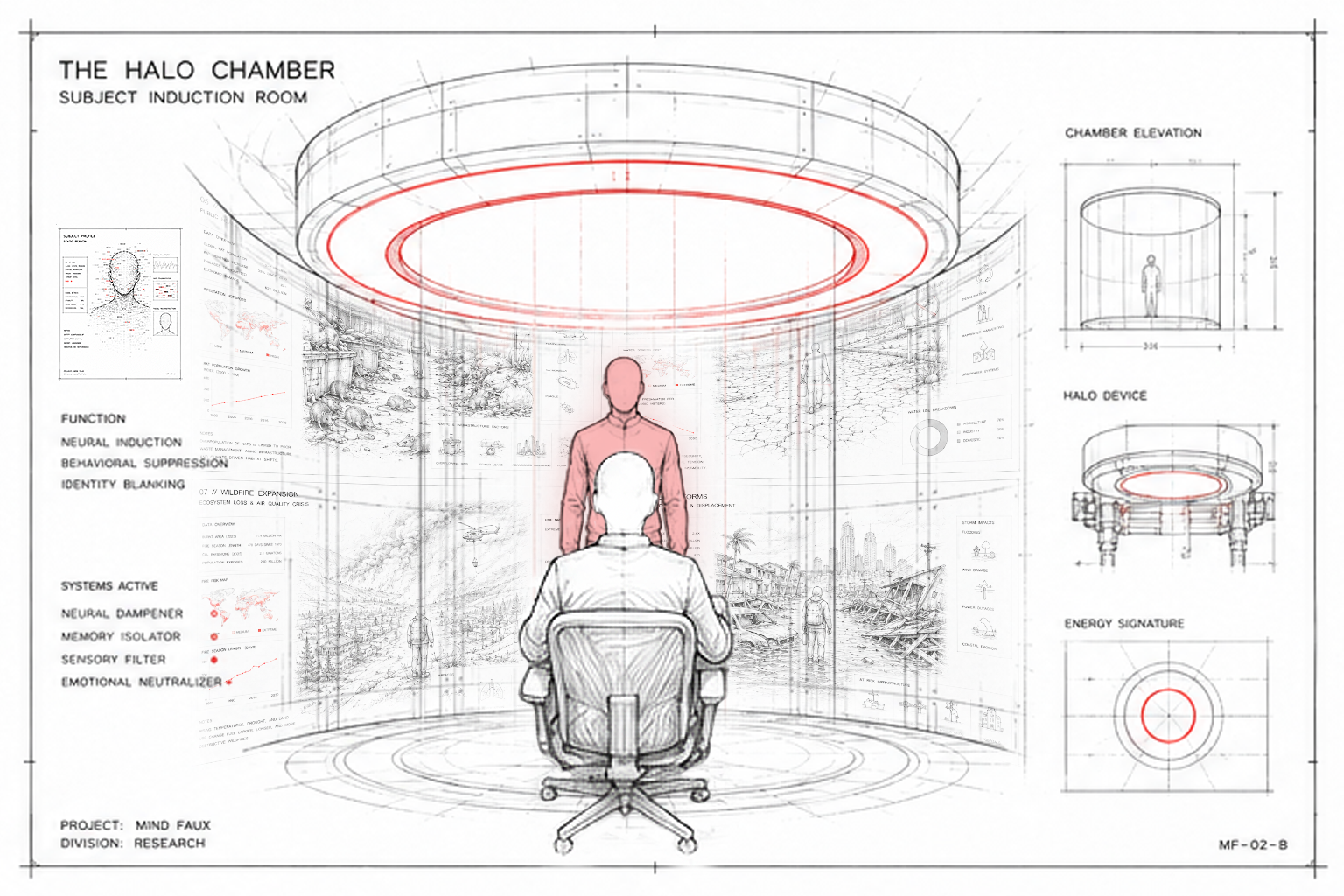
You make choices about

  • Energy

  • Food

  • Housing

  • Transport

  • Education

  • Policy


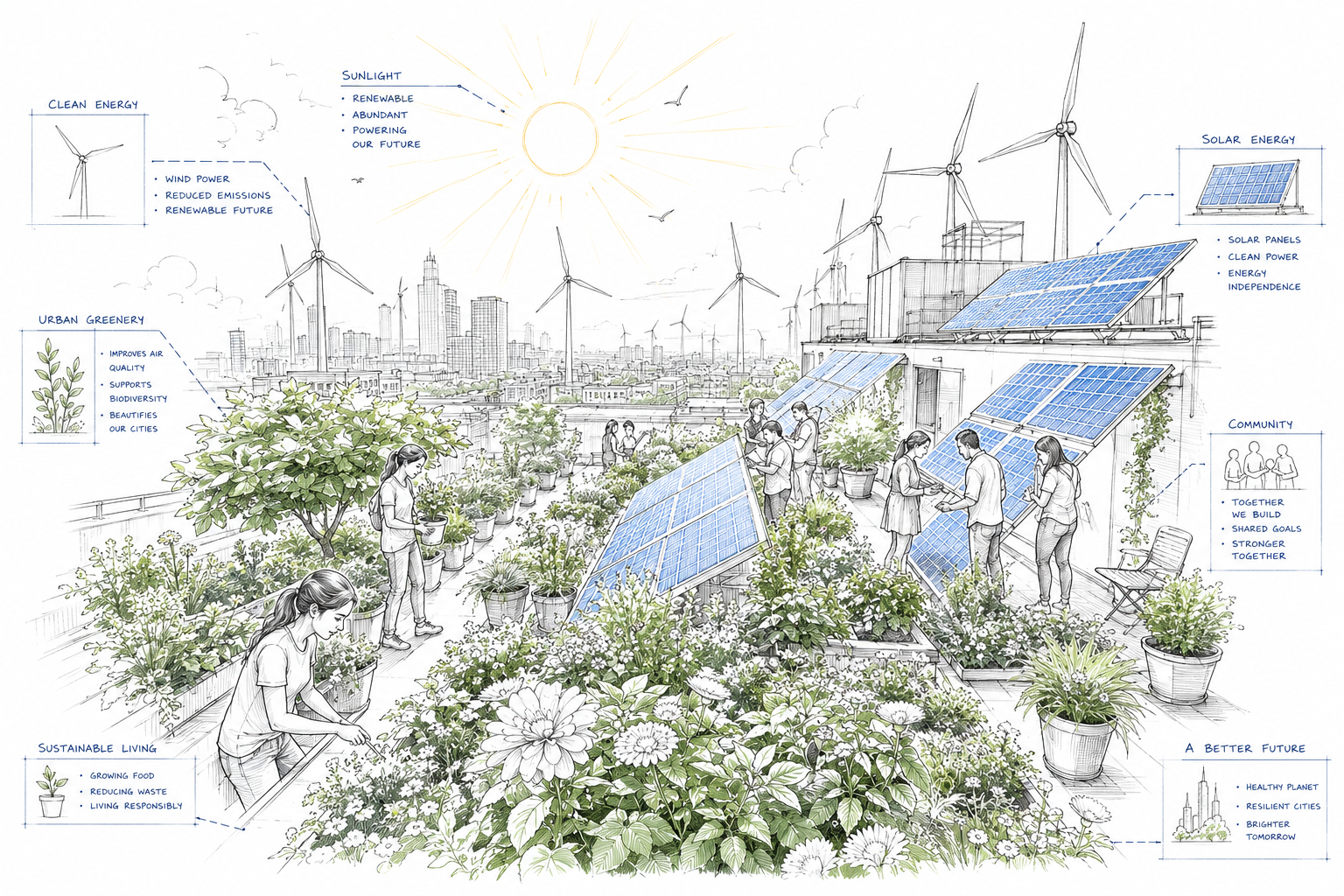
Illustration of a rooftop community garden with solar panels, wind turbines, and people tending to plants, highlighting benefits like renewable energy, urban greenery, sustainable living, community building, and a better future.

At first everything works.
The city is thriving

Drawing of a black person with a bob haircut, wearing large hoop earrings, and dressed in a tank top with a cardigan over it.

THEN CONSEQUENCES BEGIN TO APPEAR!

Warning sign with red border and black exclamation mark inside a white triangle.

IMAGINE THIS…

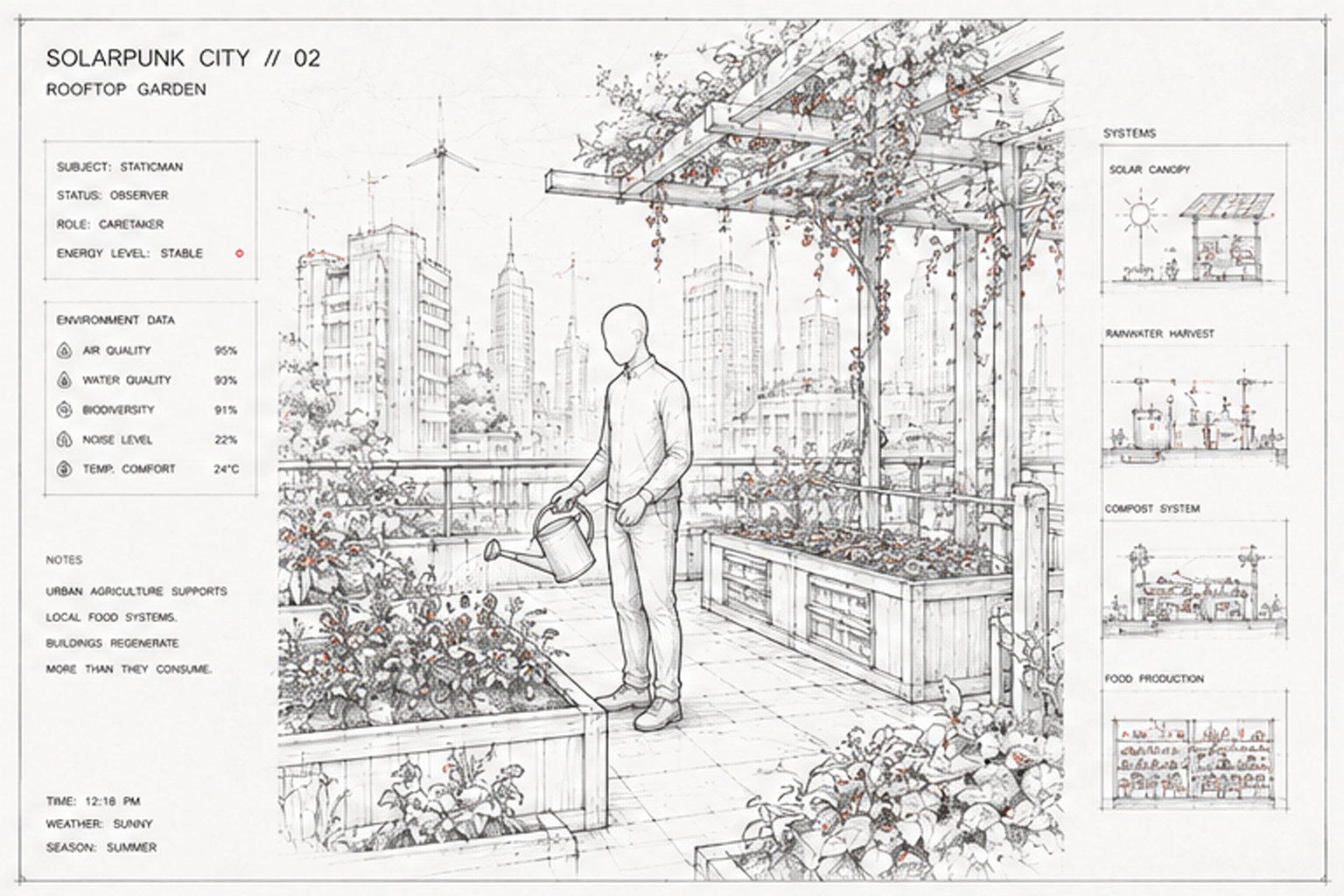
Line drawing of a person watering plants in a rooftop garden with a city skyline in the background, surrounded by plant beds, with data and system diagrams on the sides.

Green rooftops. Clean energy. Happy Citizens.

Warning sign with a white background, a black exclamation mark, and a red border.

THEN A WARNING FLASHES!

WATER RESERVES CRITICAL!

QUESTION: What would you sacrifice to save your city?

NOT DOOM. 

POSSIBILITY.

The real villain is not evil people.
It’s the consequences nobody sees coming.
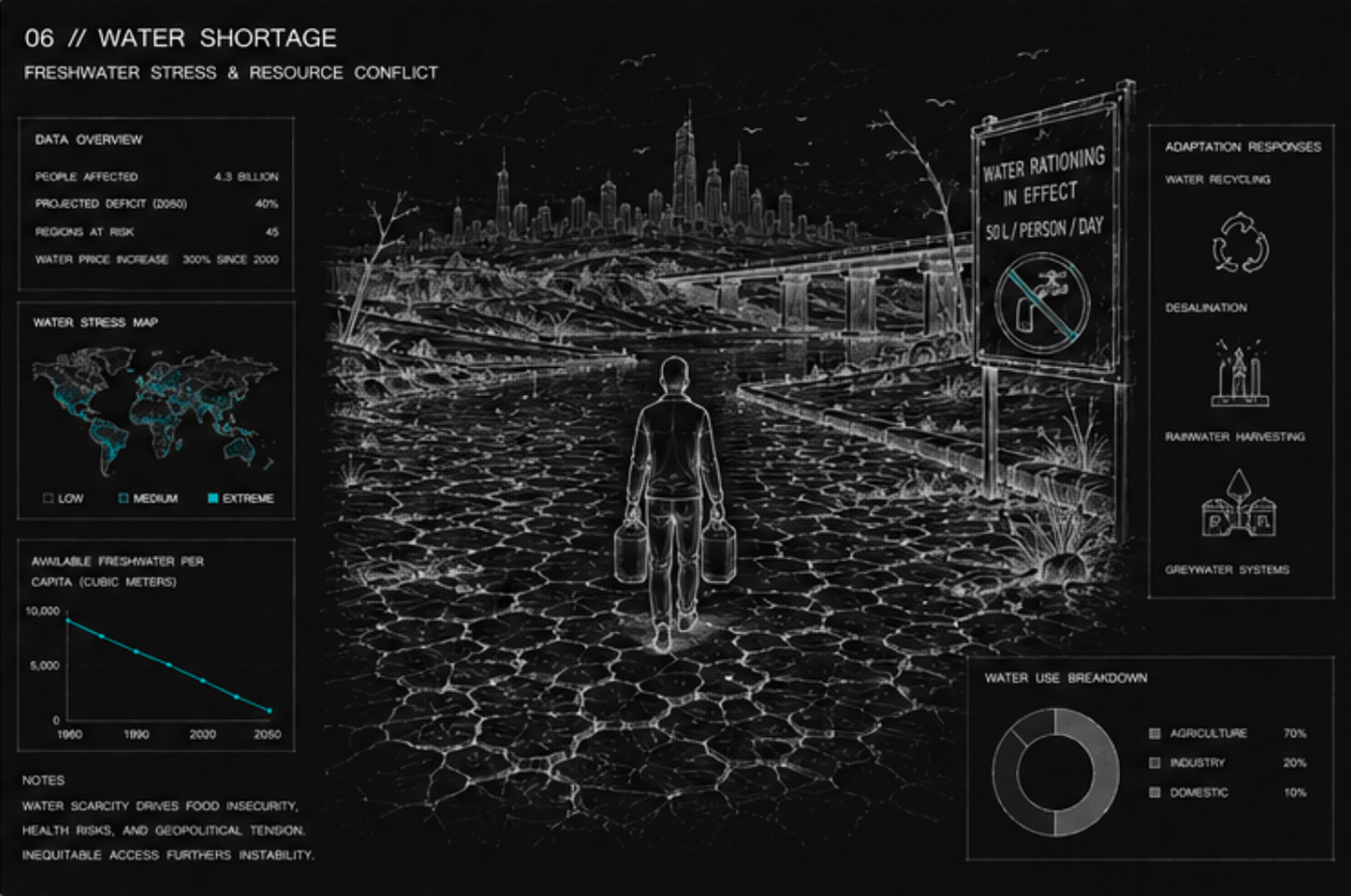
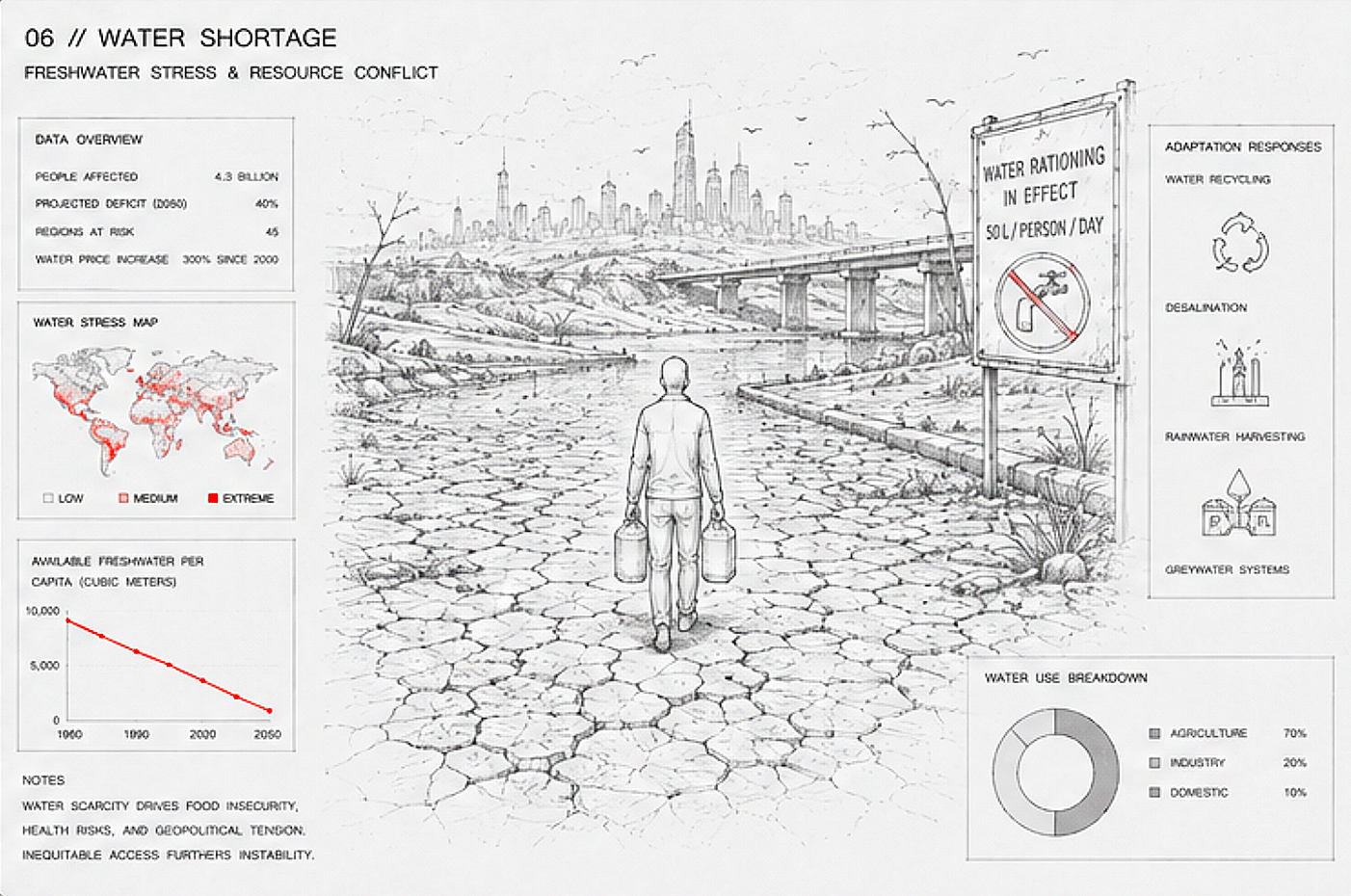
Infographic about water shortage showing a city skyline, a person walking with containers, and data on water stress, drought risks, water recycling, rainwater harvesting, greywater systems, and water use breakdown.
Sketch of a man walking on cracked dry ground, carrying buckets, with a city skyline and a bridge in the background. To the right, there is a sign about water rationing, and various icons and graphs about water shortage and usage.

The Game asks:

What happens after the solution?

Examples:

  • Build more data centers → More water usage

  • Increase production → More rare mineral extraction

  • Reduce one crisis → Create another

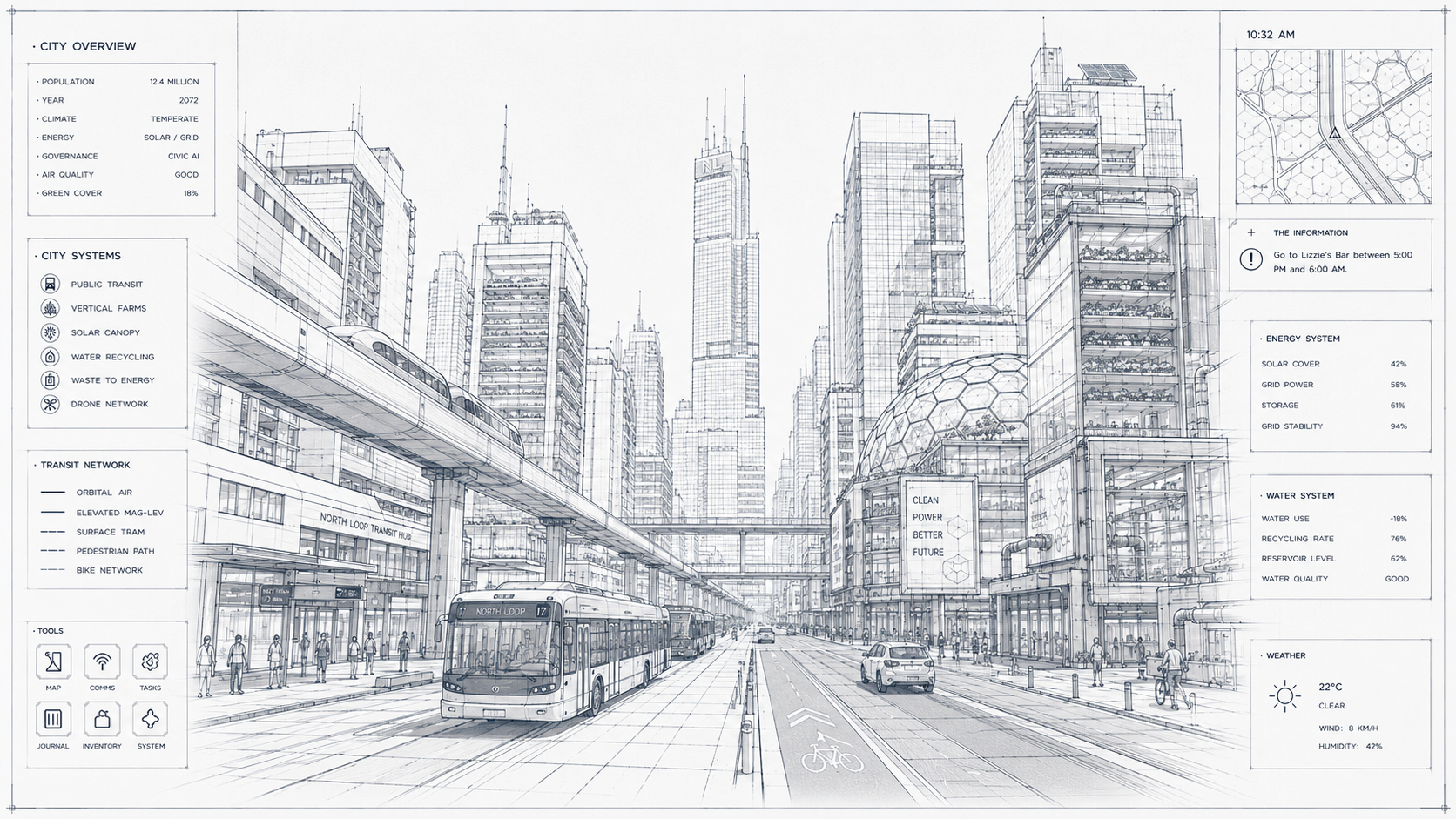
Futuristic cityscape sketch showing high-rise buildings, a city transit bus on a street with bicycles and pedestrians, with informational panels about city systems, environment, and weather.

“Hope is not presented as fantasy.

Hope is presented as action.

Hope is presented as a choice.”

“Hope is not presented as fantasy.

Hope is presented as action.

Hope is presented as a choice.”

Silhouette of an industrial cityscape with factories and smokestacks emitting smoke, set against a dark sky.
Illustration of three modern wind turbines on a black background.

THE REAL VILLAIN

Most climate stories end with collapse. This one doesn't.
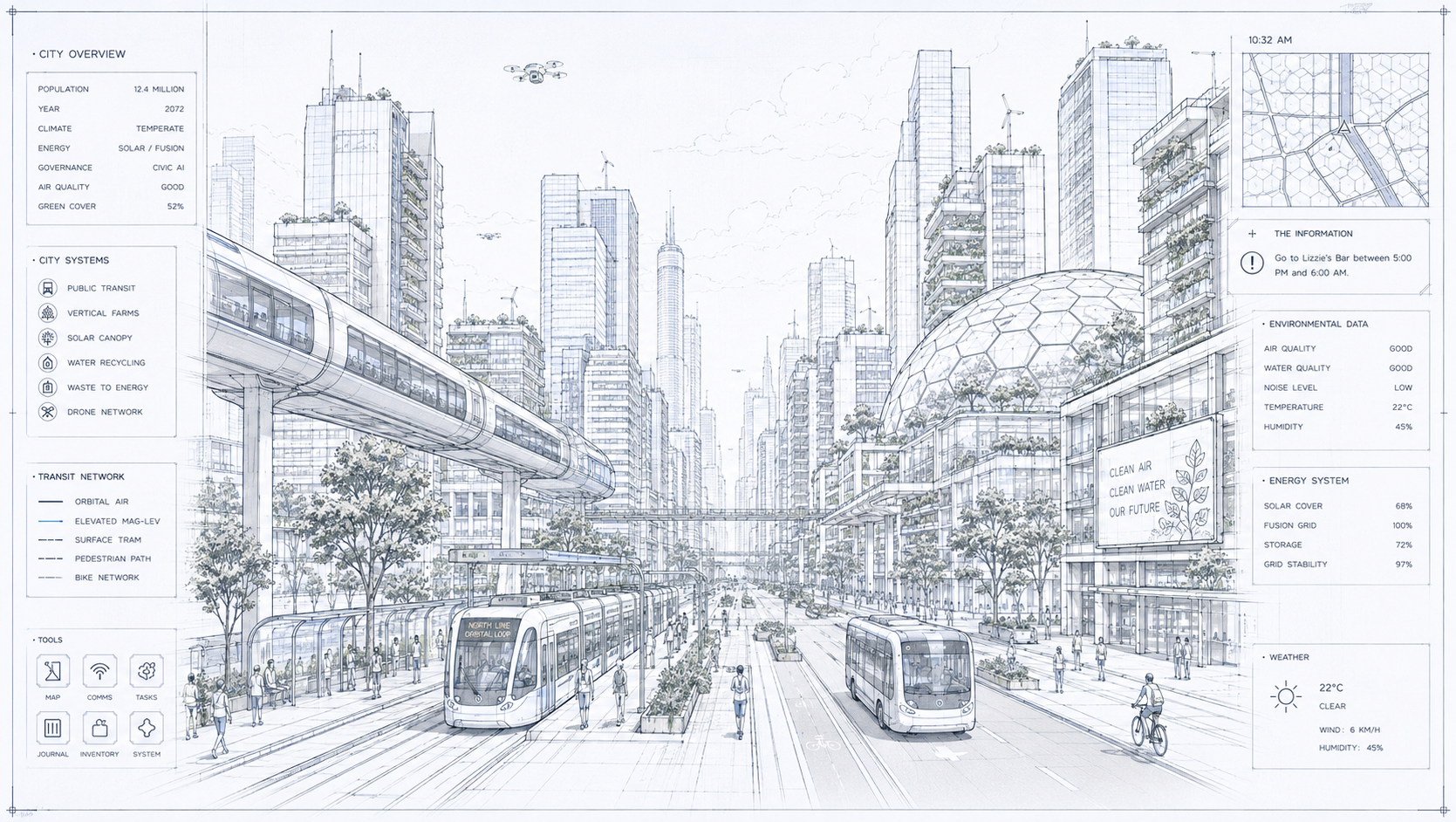
Futuristic cityscape sketch showing a modern urban area with high-rise buildings, a sky train, streets with pedestrians and cyclists, and digital information panels providing environmental and transit data.

The Solarpunk Path rejects traditional survival tropes of extraction and isolation, tasking players with healing degraded landscapes through community resilience and ecological restoration. In this high-tech, green-life future, success is measured not by wealth or dominance, but by symbiotic cooperation, biodiversity, and human well-being.
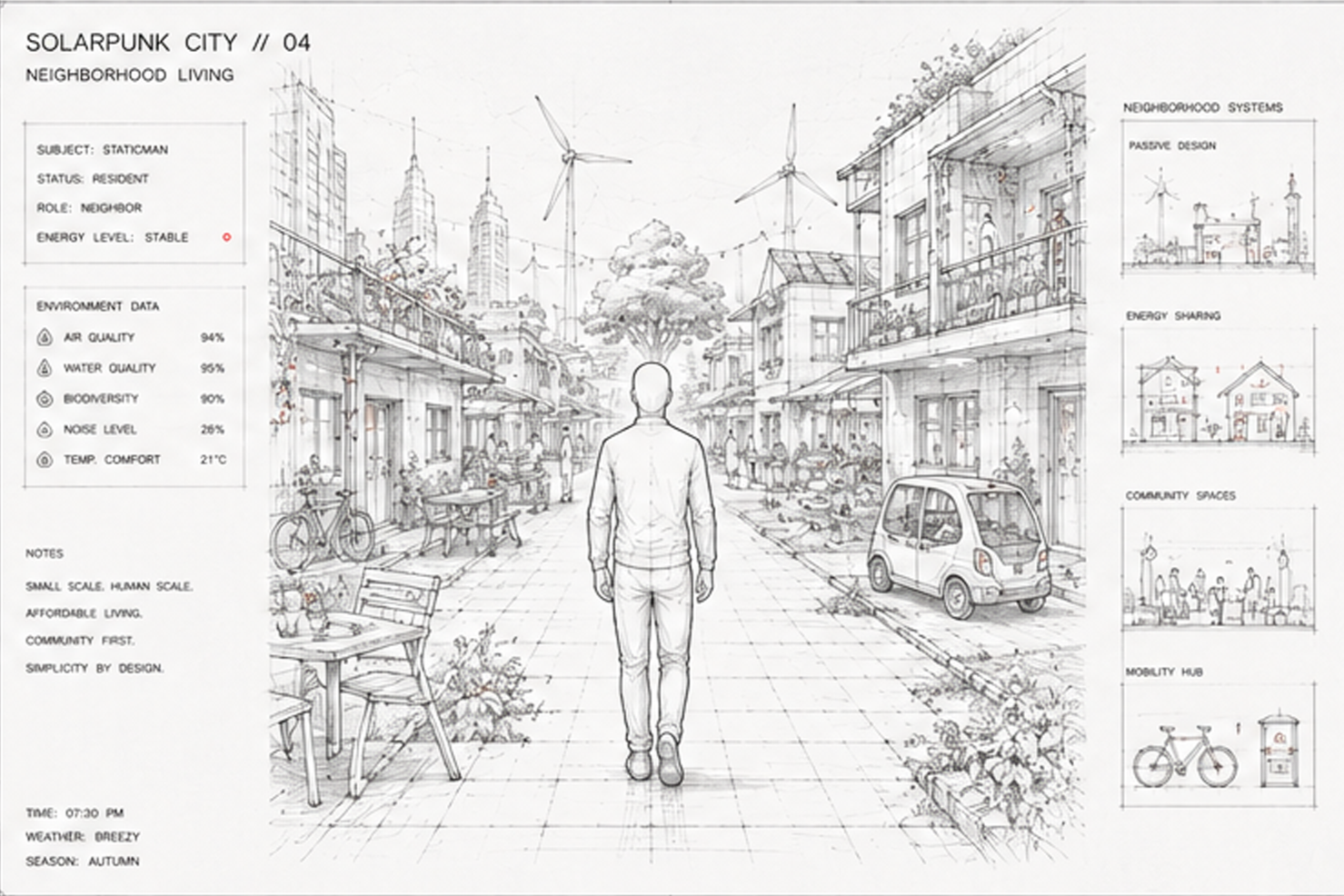
A detailed architectural sketch of a neighborhood street scene featuring a person walking down the sidewalk. The street is lined with residential buildings, outdoor cafes, and a parked car. Wind turbines are visible in the background along with tall buildings or skyscrapers. The sketch includes environmental data on air quality, water quality, biodiversity, noise level, and temperature, along with notes on community design, affordability, and simplicity.

THE
MISSING
PIECE IS
AGENCY

People don't need more information.
People know the climate is changing.

The question is: What to do about it?
People need ways to understand:

  • How systems connect.

  • Why decisions matter.

  • Where they have influence.

  • How communities create change.

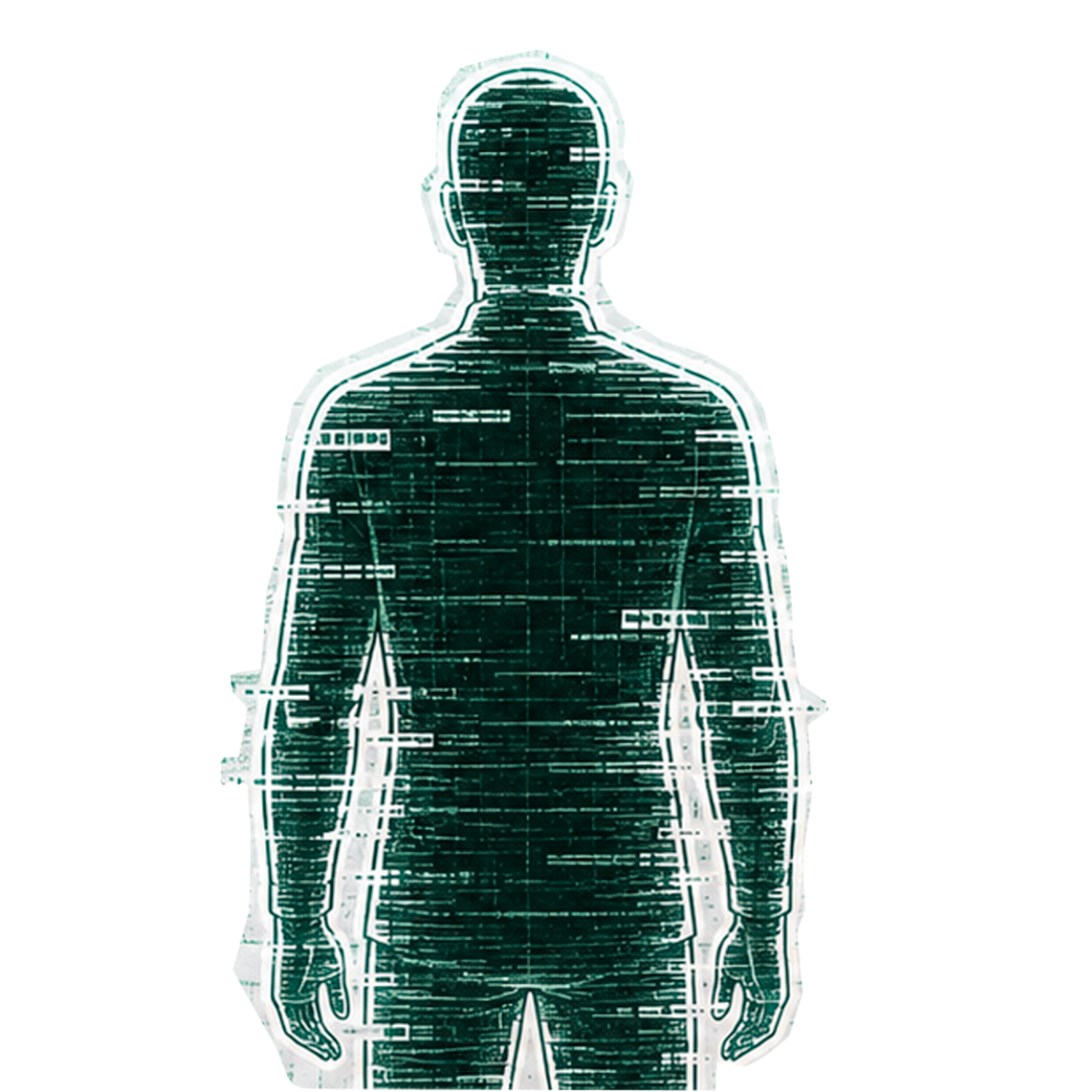
Silhouette of a human figure with digital and circuit-like overlays, resembling a futuristic or technological representation of a person.
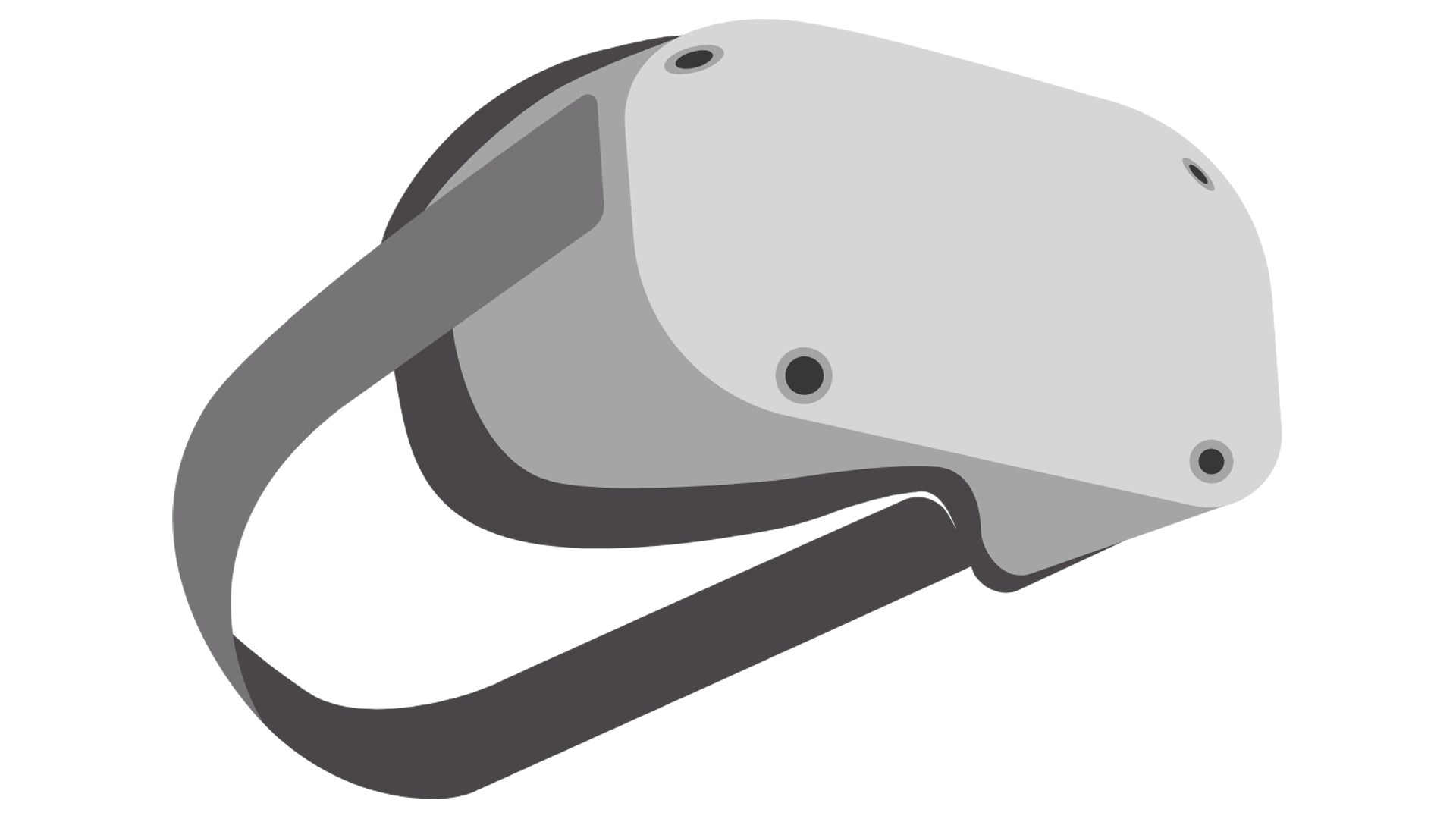
Close-up of a white virtual reality headset with black eye sensors, isolated on a black background.

THE REAL IMMERSION HAPPENS

AFTER THE HEADSET COMES OFF

The Game is only the beginning.
Players continue the experience through:

  • AR discussion cards

  • Community events

  • Workshops

  • Conversations

  • Classrooms

  • Libraries

  • Museums

“THE PROJECT IS DESIGNED TO SPARK DISCUSSION
LONG AFTER GAMEPLAY ENDS.”

WHAT SUCCESS LOOKS LIKE

The Goal Is Agency.
The goal is helping people move from concern to participation, from isolation to community, and from imagining a better future to helping build one.
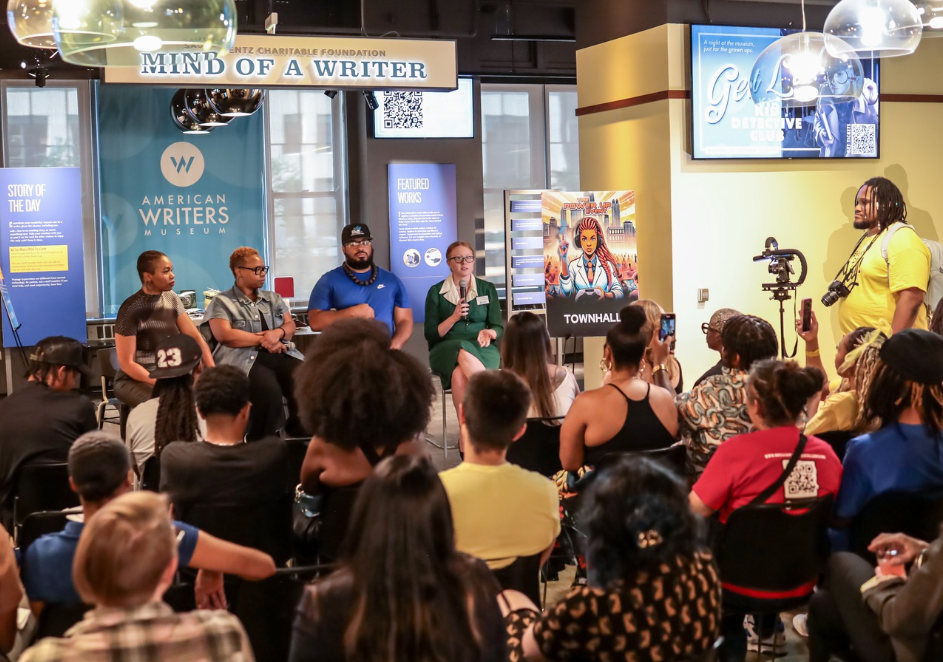
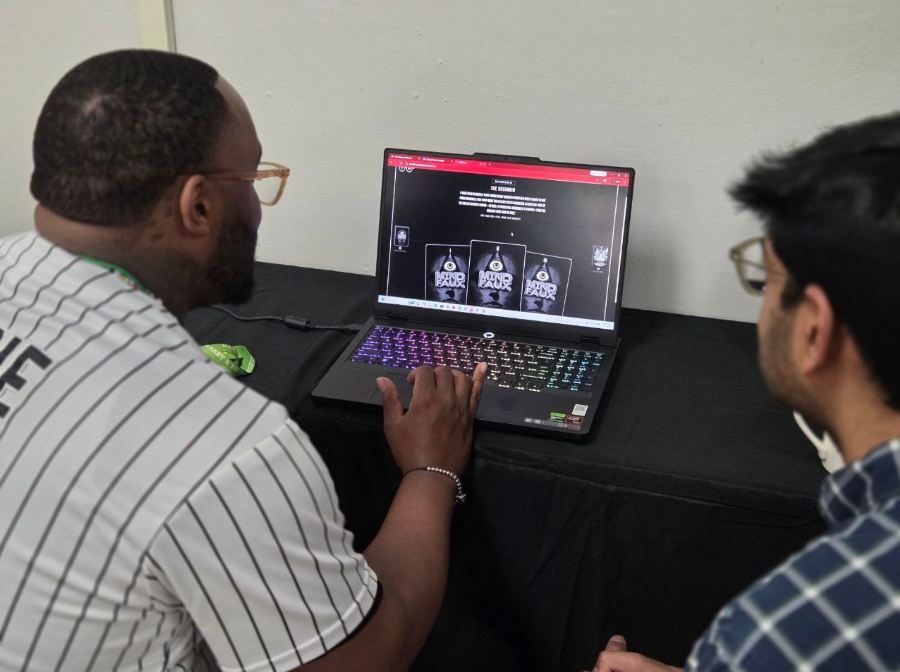
Success is:

  • A student asking better questions.

  • A family having a climate conversation.

  • A teacher bringing systems thinking into class

  • A community imagining solutions together.
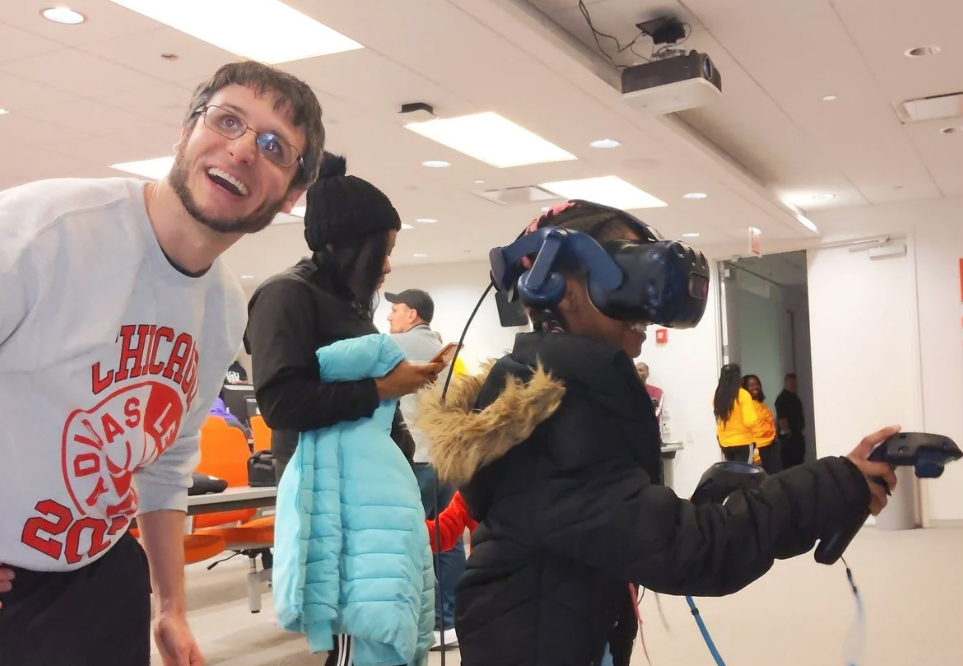
Metrics:

  • Participation

  • Engagement

  • Discussion

  • Learning

  • Action

WHY MIND FAUX IS DIFFERENT

Help us transform climate awareness into climate agency.

A hallway with a large red-leafed tree inside, surrounded by framed artwork and white columns, with a view of a glass ceiling at the end.

Most climate experiences focus on awareness.

Most immersive experiences focus on what happens inside the headset. Mind Faux focuses on what happens after.

Built on years of testing through games, AR-enabled cards, workshops, public activations, and facilitated discussions, Mind Faux is a proven framework for helping people engage with complex topics and move from awareness toward action.
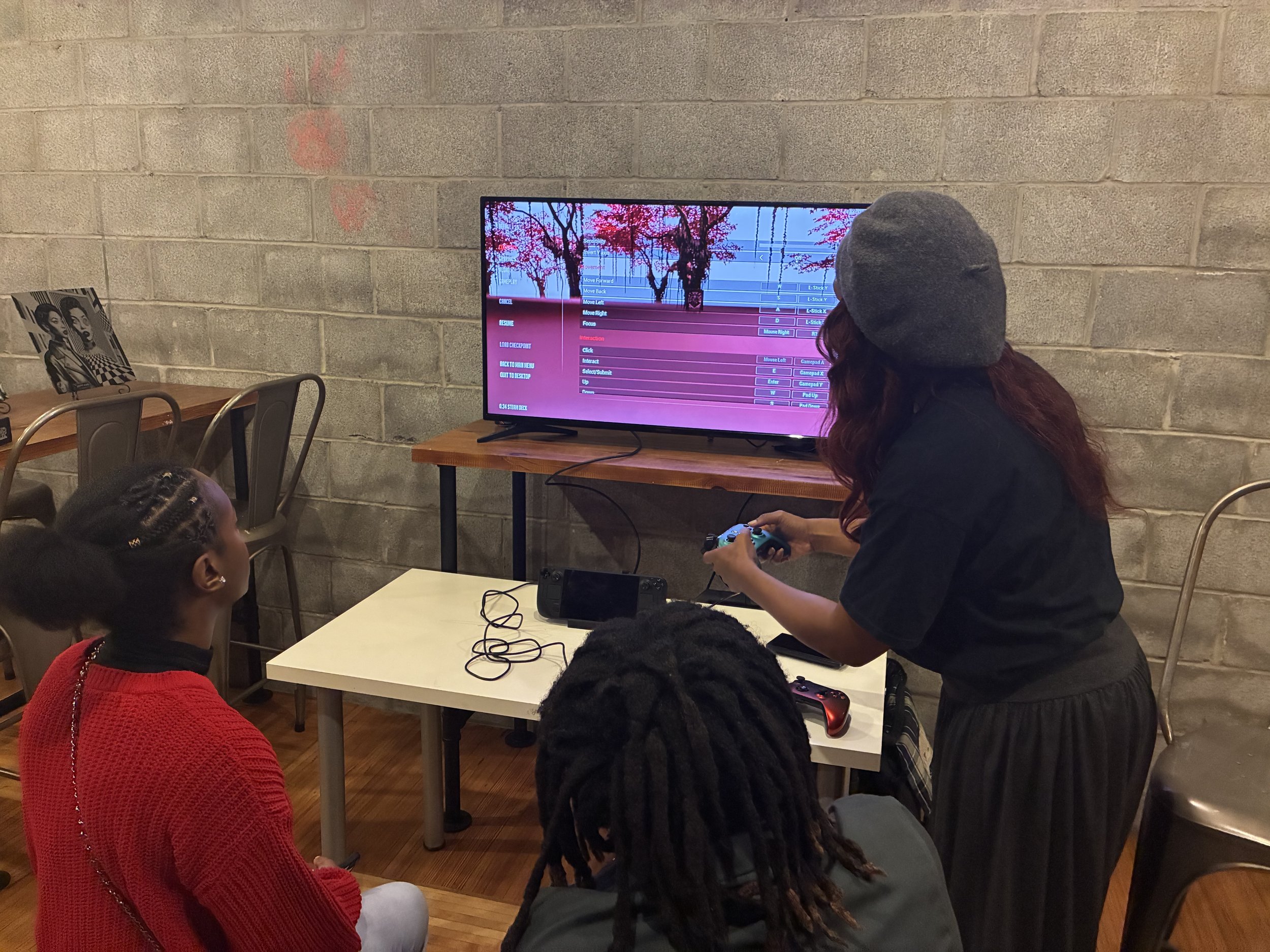
A woman wearing a gray beanie and black shirt is playing a video game with a controller while standing in front of a television displaying a scene with pink trees and a blue sky. She is surrounded by children sitting at a table, with one wearing a red sweater in the foreground and another with braided hair.

Five Unique Assets

Proven Community Framework

Climate-Informed Design (Dr. Colin Kyle, Climate Ecologist)

International Collaboration (Chicago + Serbia)

Beyond-the-Screen Engagement (VR, Web, AR, Cards, Workshops, Community Events)

Solarpunk Futures (A future worth building, not just avoiding)
SCIENCE MEETS
STORYTELLING

SCIENCE MEETS
STORYTELLING

The project sits at the intersection of
science, design, and community.

  • Keisha Howard

    FOUNDER SUGAR GAMERS LABS

    Game designer, educator, TEDx speaker for a solarpunk future with creativity and practical solutions.

  • Colin Kyle

    ECOLOGIST

    A published climate researcher currently sharing his superpowers at the University of Chicago.

  • Djordje Djordjic

    PIXELS2PIXELS

    XR development, immersive interactive storytelling, and a broad international perspective

Experience the
Future of Mind Faux

Watch the prototype in action and see how Mind Faux transforms complex decision-making into engaging gameplay. Then explore what's coming next in Second Order Effects, where every environmental choice creates consequences that ripple through the world.

Dive deeper into the project and follow its development. View Full Pitch Deck

VIdeo Credit: Shawna Mills